Choosing a Fire Alarm System for Your High Wycombe Business
Fire alarm quotes arrive wrapped in codes, L2, P1, addressable, Grade A, and comparing them feels impossible until you realise the choice follows a sequence. Answer five questions in order, and the right system selects itself. Work through them before any salesperson visits, and you will read every quote that follows with clear eyes.
Start With Your Fire Risk Assessment, Not A Brochure
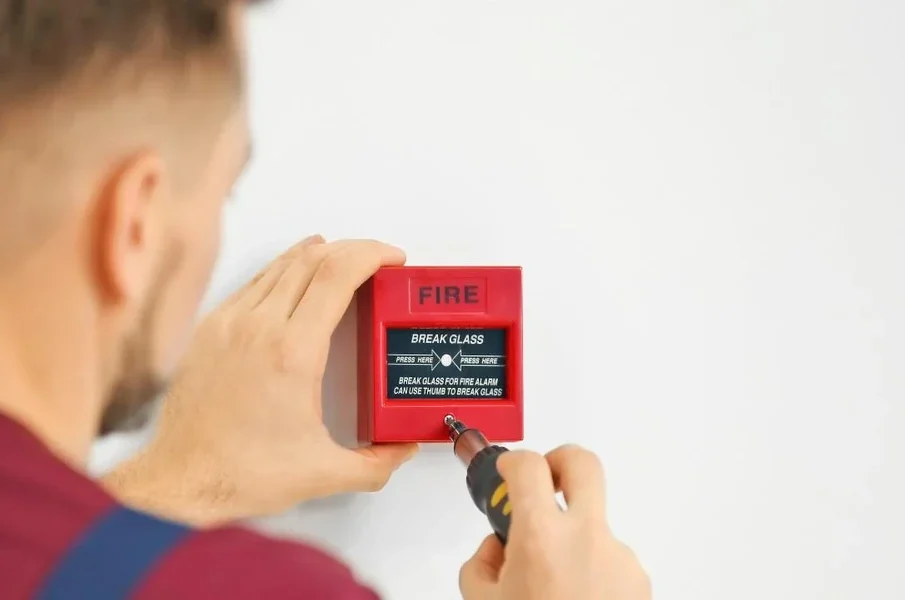
The first answer is already written down. Your fire risk assessment determines what level of detection the building needs, and British Standard BS 5839-1 translates that need into categories. The L categories protect life: L1 puts detection everywhere, L2 covers escape routes plus high-risk rooms, L3 covers escape routes and the rooms opening onto them, L4 covers escape routes only, and M means manual call points with no automatic detection at all, the break-glass-and-shout option suitable only for small, simple, always-occupied spaces. The P categories protect property: P1 for the whole building, P2 for defined areas. Many businesses need a blend, such as L2 for life with P2 over a server room. If a quote names no category, the installer skipped the only step that matters.
Then Ask: Does Anyone Sleep Here, And Who Is At Risk?
Sleeping risk drives everything upward. Premises with overnight occupants, the hotels and HMOs around the town centre, sit at L1 or L2 with no sensible alternative, because sleeping people need the earliest possible warning. Awake, able-bodied staff in a small unit can justify a lower category. High hazard pushes the answer up regardless: High Wycombe’s joinery and furniture workshops, with their timber dust and finishing products, warrant detection well beyond what their floor area alone would suggest.
Then: Conventional Or Addressable?
Conventional systems divide the building into zones, and an activation tells you “something, somewhere in zone three”. They cost less and suit smaller, simpler premises. Addressable systems give every detector its own identity, so the panel reports “smoke detector, first-floor stationery store”, which means faster response, faster fault-finding and far less disruption from false alarms. Above roughly twenty devices, or across multiple floors, addressable pays for itself in saved downtime. Wireless versions solve the cabling problem in the listed and older buildings along the High Street, where running cable through historic fabric is slow, expensive and sometimes forbidden.
Then: Who Hears It At Three In The Morning?
An alarm that rings in an empty industrial unit on Cressex at 3am protects nothing. Remote monitoring connects your panel to an alarm receiving centre that phones keyholders and, where appropriate, the fire service. For property protection, monitoring converts a P category from a noise into an actual defence, and many insurers discount premiums accordingly. Weigh the modest monthly fee against the value of the stock, machines or data sitting in the dark.
Finally: Who Installs And Who Maintains?
Certification separates professionals from electricians with a sideline. Look for third-party certification such as BAFE SP203-1 for design, installation and commissioning, and insist on a completion certificate naming the category achieved. Then plan the aftercare the standard expects: a weekly call point test by your own staff, logged in the fire logbook, and professional servicing at least every six months. An unmaintained system fails silently, and a failed system discovered after a fire creates precisely the liability the purchase was meant to prevent.
The Sequence In One Line
Category from the risk assessment, level set by sleeping risk and hazard, technology sized to the building, monitoring matched to occupancy, and certified hands doing the work. Reputable fire alarm specialists in High Wycombe will walk this exact sequence with you, survey before quoting, and name the BS 5839 category on the paperwork. Anyone who starts the conversation with a price rather than a question has already answered question five for you.