Is Pest Control Safe for My Pets? What Lake Elsinore Families with Dogs and Cats Should Know About Lake Elsinore Pest Control
It’s the question Main Sail Pest Control gets on nearly every first call: is this safe for my dog? My cat? My kids? The hesitation is understandable. You’re inviting someone to apply chemicals around the place where your family and your animals live. You want the bugs gone, but not at the expense of your golden retriever’s health. In Lake Elsinore and across southwest Riverside County, most households have at least one pet, and Lake Elsinore pest control services need to account for that reality. The good news is that modern professional pest control products and application methods are specifically designed to target pests while minimizing risk to mammals. But “minimizing risk” and “zero risk regardless of circumstances” aren’t the same thing, and knowing what precautions to take makes the difference.
How Professional Products Differ from What You’d Buy at the Store
The active ingredients used in professional pest control are often the same chemical classes available in consumer products, primarily pyrethroids and some newer chemistries like chlorantraniliprole. The difference is in formulation, concentration, and application method.
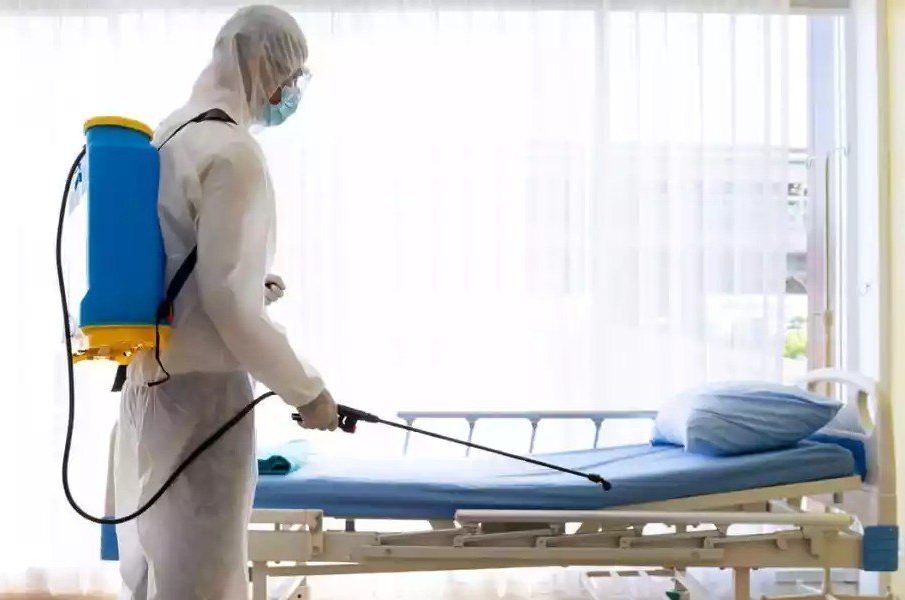
Professional products are applied at precise dilution rates to specific surfaces and locations. Your technician isn’t coating every surface in your house with insecticide. They’re applying a targeted band along the exterior foundation, around entry points, in cracks and crevices, and in areas where pest activity has been observed. The amount of product that ends up on any given surface is measured in fractions of an ounce spread across large areas.
Store-bought aerosol sprays, by contrast, are designed for the consumer to apply liberally across broad surfaces. The application rate is uncontrolled, the coverage is uneven, and the residue often ends up on surfaces where pets eat, sleep, and play. Ironically, the DIY approach tends to create more chemical exposure for pets than a professional treatment does because the application is less precise and the dosing is less controlled.
What “Pet Safe” Actually Means in Practice
No pest control product is completely nontoxic. Even products marketed as natural or organic contain active ingredients that are designed to kill insects, and any substance that kills one organism has some level of biological activity in others. The relevant question isn’t whether the product is toxic in absolute terms. It’s whether the amount your pet would realistically encounter during normal behavior poses a meaningful risk.
For the products Main Sail uses in their standard general pest treatment, the answer is that the risk to dogs and cats is extremely low once the product has dried. The wet application is where the exposure window exists. While the product is still liquid on the treated surface, direct contact could transfer the active ingredient to paws or fur, which the animal might then ingest through grooming. Once the product dries, typically within 30 to 60 minutes depending on temperature and humidity, it bonds to the surface and the exposure pathway is effectively closed.
This is why the standard recommendation is to keep pets off treated surfaces until the product has dried. For exterior treatments applied to the foundation and perimeter, that means keeping your dog out of the treated band along the house for about an hour after application. For interior treatments, keeping pets in an untreated room or outside until the product dries is sufficient.
Dogs vs. Cats: Different Risk Profiles
Dogs and cats metabolize chemicals differently, and this affects how cautious you should be with each species.
Dogs are generally less sensitive to pyrethroids, the most common class of insecticide used in residential pest control. A dog that walks across a recently treated surface and licks its paws is unlikely to experience any adverse effects once the product has dried. During the wet phase, the risk is still low for dogs, but keeping them off the treated area eliminates even that small exposure.
Cats are more sensitive to certain insecticides, particularly pyrethroids, because they lack some of the liver enzymes that dogs and humans use to metabolize these compounds. Permethrin, a common pyrethroid, is the one that raises the most concern for cat owners. At the concentrations used in professional perimeter treatments, the risk to cats is minimal once the product has dried, but cats should be kept away from wet applications more carefully than dogs.
If your household includes cats, let your technician know. A knowledgeable Lake Elsinore pest control technician will already be using products and application methods that account for feline sensitivity, but confirming that your home has cats ensures the treatment plan is tailored appropriately. Some technicians will select products with active ingredients that have better safety profiles for cats, or they’ll adjust application locations to avoid areas where your cat frequents.
Rodent Control and Pet Safety
Rodent bait stations deserve their own discussion because the risk profile is different from spray treatments. Rodenticide baits contain anticoagulant compounds that are toxic to all mammals, including dogs and cats. A dog that chews open a bait station and eats the bait inside can experience a serious and potentially fatal poisoning.
Professional rodent bait stations are designed to be tamper-resistant. They’re locked plastic or metal enclosures that rats and mice can enter but that dogs and cats can’t open. The bait is secured inside the station so it can’t be dragged out. When placed correctly, tamper-resistant stations are safe around pets.
The risk arises when bait is placed without a station (which a professional shouldn’t do in a home with pets), when a station is damaged or improperly secured, or when a pet encounters a poisoned rodent and ingests it. Secondary poisoning from eating a rodent that consumed bait is a real veterinary concern, particularly for dogs that are inclined to catch and eat mice or rats.
If your property has an active rodent control program and your dog has a history of catching rodents, discuss this with your pest control technician. Snap traps can be used in areas accessible to pets as an alternative to bait, or bait stations can be placed in locations your pet can’t access, like locked utility areas or attic spaces.
Fish, Reptiles, and Birds
Aquatic pets are more sensitive to insecticides than mammals. If you have a fish tank, a turtle habitat, or a frog enclosure inside your home, cover it during any interior treatment and turn off the air pump temporarily so the filter doesn’t pull airborne droplets into the water. Inform your technician before they begin so they can avoid treating near the enclosure.
Birds are also more sensitive than dogs and cats. If you have a birdcage, move it to an untreated room or cover it and ensure ventilation for the bird during and shortly after interior treatment. Outdoor aviaries should be mentioned during the initial inspection so the technician can avoid applying product near them.
Reptiles in terrariums are generally protected by their enclosure, but covering the top and turning off ventilation fans during treatment is a reasonable precaution.
Questions to Ask Your Technician
Before any treatment, a brief conversation ensures your pets are protected. Let the technician know what animals you have, where they spend their time, and whether any pet has a history of sensitivity to chemicals. Ask how long treated surfaces need to dry before your pets can return to the area. Ask whether the products being used have any specific concerns for your pet species. And if you have outdoor pets that sleep near the foundation, ask the technician to point out exactly which areas were treated so you can keep the animal away until it dries.
These aren’t complicated conversations. Any professional technician expects them and should answer them clearly.




Leave a reply
You must be logged in to post a comment.