Retractable Awning Singapore for Flexible Shade and Outdoor Comfort
A retractable awning Singapore homeowners install on their terraces and balconies solves a problem that fixed awnings cannot: the desire for shade when you need it and an open sky when you do not. Fixed awnings provide consistent protection but permanently alter the outdoor space. A retractable system gives you both: the covered, comfortable space during intense afternoon sun or light rain, and the unobstructed view and natural light when conditions are pleasant. The mechanical simplicity of extending a fabric over a frame and retracting it back has been refined over decades into a product category that is both functional and visually elegant.
How Retractable Awnings Work
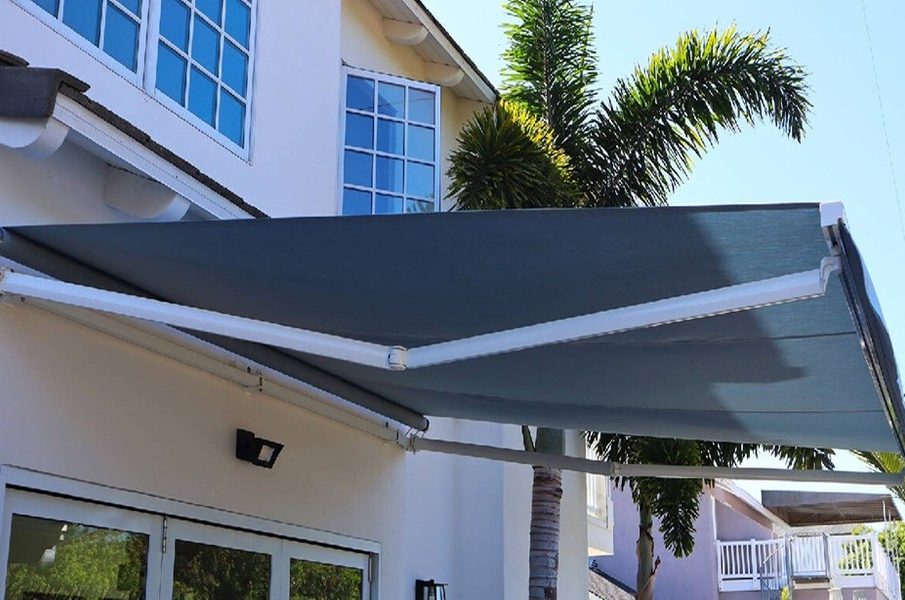
Most retractable awning systems use a cassette mechanism: a powder-coated aluminium housing mounted at the top of the wall or on a freestanding bracket that contains the fabric roll when retracted and the torsion spring or motor that drives extension and retraction. When extended, the fabric spans from the cassette to a front bar at the outer edge, supported along its length by articulated arms that hold the fabric under tension.
Manual systems use a handle or a pole to engage a geared winding mechanism. Motorised systems use a 240V electric motor housed in the cassette, operated by a wall switch or a remote control. Some motor systems include rain and wind sensors that automatically retract the awning when sensors detect conditions that could stress the fabric, which is a useful feature in Singapore where afternoon storms can arrive quickly.
The articulated arm mechanism must be strong enough to hold the fabric flat under its extended weight and maintain tension in light wind conditions. Arm quality is one of the differentiators between budget and quality retractable awning products. Low-quality arms develop play in their pivots over time and cause the extended fabric to sag or flutter in wind, which looks poor and stresses the fabric at the pivot points.
Fabric Selection for Singapore’s Conditions
The fabric used in a retractable awning spends most of its life rolled up in the cassette, which protects it from UV exposure when not in use. When extended, it is exposed to Singapore’s intense UV and to rain if the awning is left out during showers.
Solution-dyed acrylic is the preferred fabric for quality retractable awning Singapore installations. The colourfastness of solution-dyed acrylic under UV exposure, its resistance to mould and mildew in humid conditions, and its ability to be cleaned with mild detergent without degrading make it well suited to a climate where a fabric awning may be exposed to several heavy rain events per week during wetter months.
Fabric stripes are the most popular aesthetic choice for residential retractable awnings in Singapore. The striped pattern is a traditional awning motif and works across a range of architectural styles. Solid colour fabrics project a cleaner, more contemporary appearance and work well on modern architectural backgrounds where visual simplicity is the goal.
“Outdoor spaces that work with the seasons and the weather, rather than against them, become the spaces that families actually inhabit.” – Lee Kuan Yew, founding Prime Minister of Singapore.
Installation Requirements
A motorised retractable awning Singapore installation requires both a structural attachment point and a nearby 240V power source for the motor. The structural attachment must be into solid material: concrete, brick or steel. Attachment into timber or lightweight cladding requires specialist fixings rated for the pull-out load the awning exerts when extended in wind.
The horizontal mounting position of the cassette at the top of the wall determines the projection angle of the arms when extended. Positioning that is too high creates a steep arm angle that reduces the effective shade coverage. Positioning that is too low interferes with head clearance below the extended front bar. The optimal height depends on the projection length being used and the ceiling height or beam position above the terrace.
For HDB and condominium properties, confirm the approval requirements for external awning installations before ordering. Most residential awning installations on individual unit terraces and balconies fall within the permitted works framework or require only notification rather than full approval, but the specific requirements vary by property type and estate.
Maintenance and Longevity
Retractable awnings require moderate maintenance to perform well over their service life. Retract the awning when it is wet and leave it extended for a period on a dry day to allow the fabric to dry fully before storing it rolled up. Storing wet fabric promotes mould and mildew growth that stains and degrades the material.
Clean the fabric at least twice a year with a soft brush and a diluted mild detergent solution, rinsed thoroughly with clean water. Clean the cassette and arm mechanisms with a damp cloth and check for any debris accumulation in the cassette housing.
Lubricate the arm pivot points annually with a silicone-based lubricant. Do not use oil-based lubricants, which attract dust and debris. For motorised systems, have the motor serviced by the installer at two to three year intervals to check the motor condition, remote control function and sensor calibration.
A retractable shade Singapore system installed with quality components, maintained properly, and stored in the retracted position during periods of intense wind will provide ten to fifteen years of reliable use, transforming the flexibility and comfort of an outdoor living space through every season.
A retractable awning Singapore property owners invest in thoughtfully becomes the feature they use every day rather than the one they regret not installing sooner.