Concrete Contractor in Lathrop: Building Strong Foundations and Driveways
Concrete supports some of the hardest-working parts of a home. It carries structural loads, creates stable access for vehicles, and withstands daily exposure to sun, water, soil, and changing temperatures. Its performance, however, depends on far more than the mixture delivered to the property.
Careful planning, ground preparation, placement, finishing, and curing all shape the finished result. For homeowners in Lathrop CA, selecting a contractor who considers each of these stages can help create surfaces and structures suited to the property’s needs.
Strong Results Begin Below the Surface
A new slab is only as stable as the ground beneath it. Before work begins, the project area should be evaluated for drainage, soil conditions, access, slope, and the intended load. The contractor may then excavate the area, compact the soil, and install an appropriate aggregate base.
These steps help create consistent support. Poorly compacted ground can settle unevenly, leaving the slab more vulnerable to movement and cracking. Standing water can also weaken the surrounding soil or place added stress on the concrete over time.
Clear communication matters at this stage. When evaluating a concrete contractor, Lathrop property owners should discuss how the area will be used, where water travels during storms, and whether vehicles or structural elements will place concentrated loads on the finished work.
What Quality Placement Involves
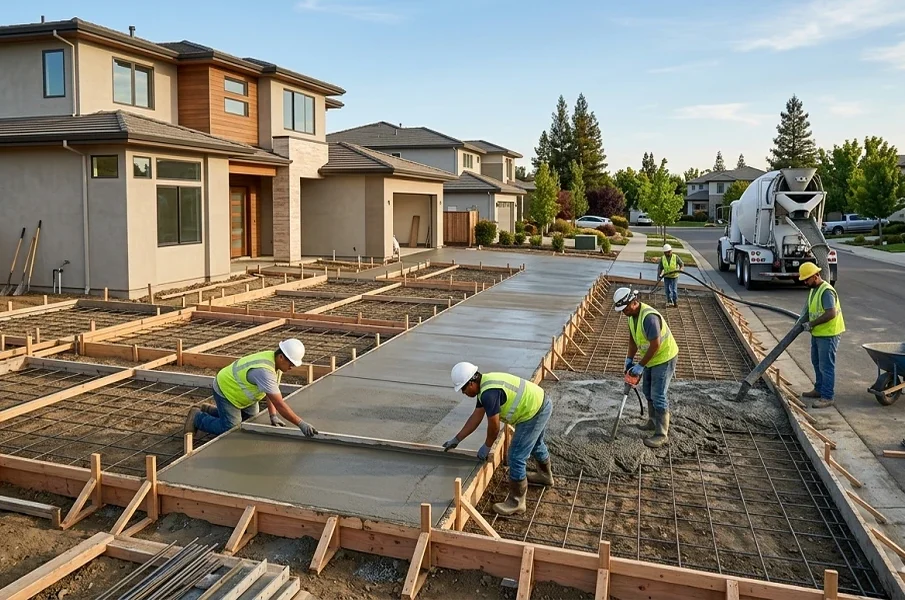
Successful concrete pouring requires coordination. Forms must hold the correct dimensions and slope. Reinforcement must be positioned as designed. The mixture must arrive when the site and crew are ready, then be placed and consolidated before it begins to set.
Weather also influences the process. Heat, wind, and low humidity can accelerate moisture loss. This can reduce the time available for finishing and increase the risk of surface defects if the crew does not plan accordingly.
Placement is followed by finishing, joint installation, and curing. The National Ready Mixed Concrete Association’s technical resources identify subjects such as cracking, slab joints, finishing, strength, and in-place curing as important parts of concrete practice. These details show why a finished surface should not be judged by appearance alone.
Foundations Need Precise Planning
Well-built concrete foundations distribute the weight of a structure into the ground. Dimensions, reinforcement, footing design, and other structural details should follow the approved plans and applicable requirements for the project.
The surrounding site must also be managed carefully. Drainage should carry water away from the structure instead of allowing it to collect near the base. Utility locations and penetrations need to be coordinated before placement, as later corrections can be disruptive.
Existing foundations may show cracks, moisture intrusion, settlement, or other signs of distress. Not every crack signals a major structural problem, but changes should not be ignored. Professional assessment helps determine whether monitoring, drainage correction, sealing, or more extensive foundation repair is appropriate. Treating only the visible crack without finding its cause may allow the underlying issue to continue.
Driveways Must Balance Strength and Appearance
Concrete driveways serve both practical and visual roles. They create a daily route to the garage while occupying a prominent part of the property’s exterior. A good plan considers vehicle weight, driveway width, turning space, drainage, surface texture, and the transition to nearby walkways or streets.
Thickness and reinforcement should suit the expected use. Proper slope helps direct water away from buildings and prevents avoidable pooling. Control joints create planned locations for shrinkage-related movement, while curing supports strength development after finishing.
Homeowners comparing driveway contractors should ask what the proposal includes. Excavation depth, base preparation, reinforcement, concrete specifications, joint layout, finish, curing method, and cleanup should be clear before work begins. A detailed scope makes bids easier to compare and reduces uncertainty during construction.
Choosing a Contractor with Care
Price matters, but it should be considered alongside preparation, materials, communication, and the completeness of the work. A very low estimate may leave out steps that are difficult or expensive to correct later.
California homeowners can learn about construction-industry oversight through the Contractors State License Board. Before hiring, they should verify relevant information, review the written scope, ask how unexpected site conditions will be handled, and understand the payment schedule.
A dependable contractor should also explain access needs, project timing, curing restrictions, and when the new surface can safely receive foot or vehicle traffic. Concrete continues developing strength after the crew leaves, so protecting it during this period is essential.
Build from the Ground Up with BSR Renovations
Foundations and driveways demand sound preparation and disciplined artistry. BSR Renovations helps homeowners plan concrete projects around the site, intended use, and desired finish. Visit the company’s Lathrop service page to explore the available options and discuss the next step for your property.
Frequently Asked Questions
How long must a new driveway cure before use?
The safe waiting period depends on the mixture, weather, slab design, and expected load. Homeowners should follow the project-specific instructions provided by their contractor.
Can every foundation crack be repaired in the same way?
No. The proper response depends on the crack’s location, pattern, width, movement, moisture conditions, and underlying cause. An assessment should come before choosing a repair method.
Why are joints installed in concrete slabs?
Joints help manage expected shrinkage and movement by creating planned locations for cracking. Their spacing and placement should suit the slab’s dimensions and design.