Choosing Blinds for a Beachside Home: Salt, Sun and Moisture
Living near the beach is great for you and hard on your house. Salt in the air, strong sun, humidity and wind all take a toll, and window coverings feel it more than most things. Blinds that would last fifteen years in a leafy inland suburb can look tired in five by the coast.
The fix isn’t spending more. It’s picking materials and fittings that suit the conditions. Here’s how.
| The short answer Use sunscreen roller blinds in living areas facing the water, aluminium or PVC venetians in bathrooms and kitchens, and zip screens with side channels on windy balconies. Choose aluminium hardware over steel, and wipe salt off regularly. |
|---|
What the coast does to blinds
- Salt. Fine salt particles carry inland on sea breezes and settle on glass, frames and fittings. Over time it corrodes cheap metal parts and leaves fabric feeling damp and grimy.
- Sun. In New South Wales, UV levels average between 6 and 10 all year round, according to SafeWork NSW. That fades fabric and breaks down cheaper plastics, especially on north and west-facing windows.
- Moisture. Coastal humidity keeps salt active and can encourage mould in fabric, particularly in bathrooms and laundries.
- Wind. Exposed balconies and decks get strong gusts that can damage outdoor blinds that aren’t designed for it.
Room by room
| Room | What works by the coast | What to avoid |
|---|---|---|
| Living room facing the water | Sunscreen roller blinds to cut glare and keep the view | Light fabrics that fade quickly in full sun |
| Bedrooms | Blockout roller or Roman blinds, fitted outside the recess | Unlined fabrics that glow at sunrise |
| Bathroom and laundry | Aluminium or PVC venetians, moisture-resistant roller fabric | Real timber, which can warp in humidity |
| Kitchen | Aluminium venetians or wipeable roller fabric | Fabrics that are hard to clean |
| Balcony or deck | Zip screens with side channels, folding arm awnings with wind sensors | Loose outdoor blinds that flap in the wind |
Sunscreen rollers for the view
If the view is the point of the house, sunscreen roller blinds are usually the answer for living areas. They’re a woven mesh that cuts glare and heat while you can still see out. A 3% or 5% openness suits most beach-facing living rooms. Darker colours generally give a clearer view than white or light grey, which can look washed out against the glare.
Keep in mind that sunscreen fabric becomes see-through at night when your lights are on. For street-facing rooms, a dual roller with sunscreen and blockout on one bracket gives you both.
Pay attention to the hardware
Fabric gets the attention, but the brackets, chains and motors are often what fail first by the coast. Ask about:
- Aluminium headrails and bottom bars rather than steel
- Quality components on chain mechanisms
- Motors and battery packs suited to the conditions if they’re near open windows
- For outdoor products, powder-coated aluminium frames and stainless fixings
Outdoor blinds and heat
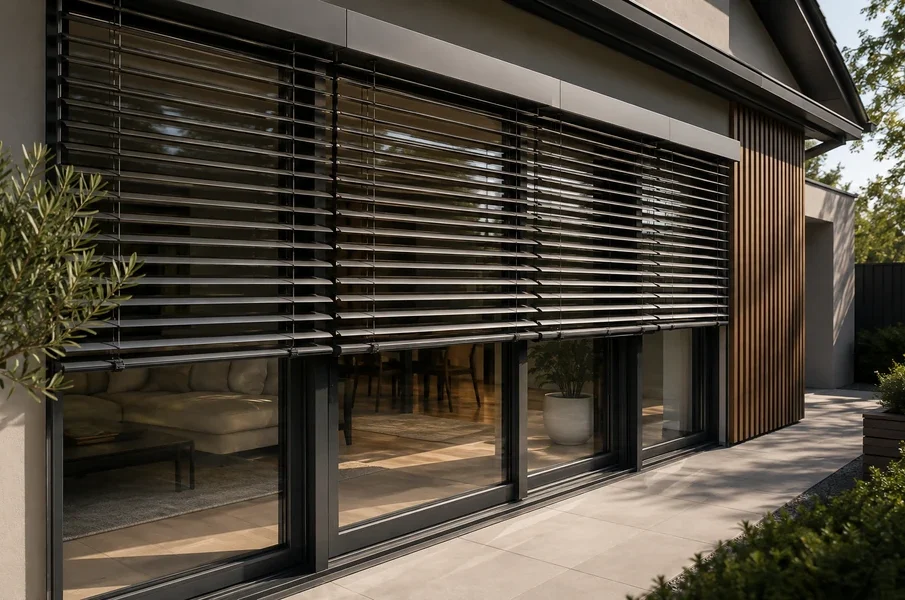
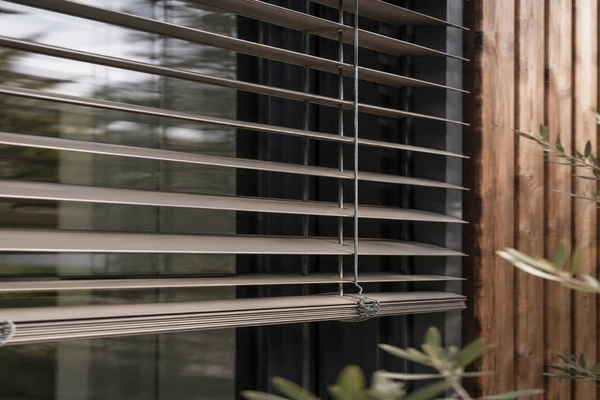
The Australian Government’s YourHome guide estimates that up to 87% of a home’s heat gain on hot days comes through the windows. Stopping the sun before it hits the glass works better than blocking it inside, which is why external venetian blinds and zip screens are popular on beachside homes with big west-facing glass. External venetians let you tilt the slats to control light. Zip screens run in side channels, which keeps them steady in wind.
If you’re in a strata building, check with your strata manager before ordering anything that goes outside.
A little maintenance goes a long way
- Wipe aluminium and PVC venetians with a damp cloth every few weeks to remove salt.
- Vacuum fabric blinds with a soft brush attachment.
- Rinse outdoor screens and awning frames with fresh water after windy, salty days.
- Open windows on dry days to keep air moving and reduce damp.
Use someone who knows the coast
Sydney’s Eastern Suburbs are a good example of how varied coastal homes are, from beachfront apartments in Bondi and Maroubra to period terraces in Paddington and big family homes on the cliffs at Dover Heights and Vaucluse. Local installer Roma Blinds in the Eastern Suburbs is based in Vaucluse and recommends sunscreen rollers for glare off the water, aluminium or PVC venetians where there’s moisture and zip screens for windy balconies.
Common questions
What blinds last longest near the beach?
Aluminium and PVC venetians, and good quality roller blinds with aluminium hardware. Real timber and cheap steel parts tend to suffer first.
Are timber venetians OK in a coastal home?
In dry living areas, yes. Avoid them in bathrooms, laundries and rooms that get a lot of humidity, where they can warp.
How do I clean salt off blinds?
Wipe hard surfaces with a damp cloth and vacuum fabric gently every few weeks. Rinse outdoor blinds with fresh water after windy days.
Whoever you use, ask them how close to the water they’ve fitted blinds before, and what they’ve seen hold up. Someone who works on the coast every week will have strong opinions about what lasts.