The Year Your House Was Built Says a Lot About Its Pipes
Every home listing includes a line most buyers skim past, the year the house was built. Plumbers read it differently. That number is the best single clue to what is running behind the drywall, because each era of construction used its own pipe material, and each material ages in its own way.
That clue is usually where a conversation about repiping in Watsonville starts. It is also where repiping in Watsonville often begins for homeowners who call the family-owned plumbing team based in nearby Royal Oaks. Their process starts with a free consultation and a camera inspection, which shows the inside of the pipe instead of relying on guesses. From there the work might be a partial reroute, a whole-home repipe or a new water line from the meter. Financing is available, and new installations carry a 10-year warranty.
Built Before 1960
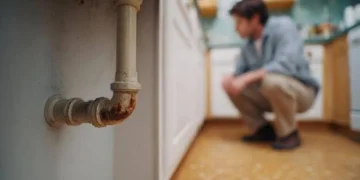
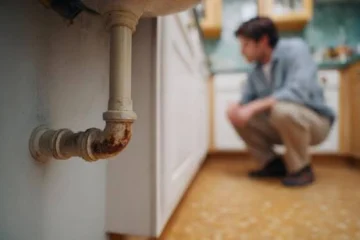
Homes from this period were usually plumbed with galvanized steel, which is iron pipe coated in zinc to slow rust. The coating wears away over a few decades, and the steel underneath corrodes from the inside. Rust and mineral deposits build up until a three-quarter-inch pipe has an opening closer to the width of a pencil.
The symptoms show up gradually. Pressure fades at the fixtures farthest from the main line. Water looks brown after a vacation. A threaded joint in the crawlspace starts to weep. Many of these houses have already been partly updated, which brings its own problem. Wherever copper was joined directly to galvanized steel without a proper dielectric fitting, the two metals react, and the joint corrodes faster than either pipe would alone.
Watsonville’s water division has confirmed that its own service lines contain no lead or galvanized pipe needing replacement, as noted on the city’s water quality page. That covers the utility’s side. The pipe from the meter into the house and everything inside the walls is the owner’s responsibility, and in an older home that is where galvanized pipe tends to remain.
The Copper Decades
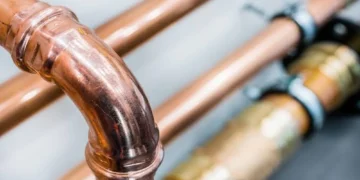
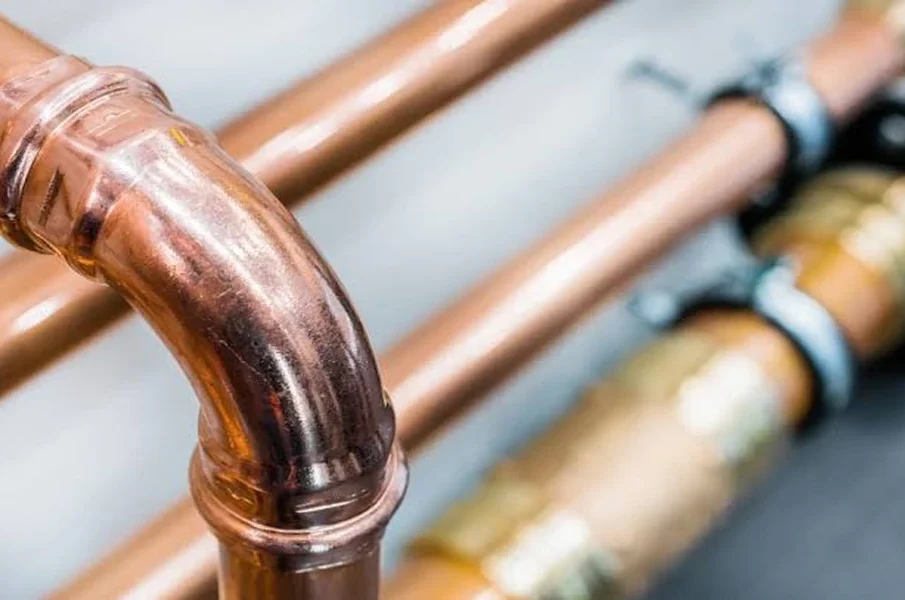
From the 1960s through the early 1990s, copper became the standard, and it has earned its reputation. Well-installed copper can last fifty years or more. It doesn’t last indefinitely, though, and it fails in its own way.
Copper usually fails through pinhole leaks. Aggressive water chemistry, high water velocity, poor grounding and debris from the original installation can all eat through the wall of the pipe from the inside. One pinhole is usually a repair. A third or fourth within a couple of years means the whole system is thinning out, and patching one spot at a time just moves the next leak somewhere else.
Hard water adds to the problem. Scale builds up at fittings and elbows, where flow is already turbulent, and the narrowing speeds up erosion just past each bend.
The Gray Pipe Years, 1978 to 1995
Some homes from this period were plumbed with polybutylene, a flexible plastic usually gray in color and often stamped PB2110. It was cheap and quick to install, and it seemed like progress at the time. It wasn’t. Chlorine in treated water attacks the plastic and the fittings, making them brittle from the inside, and failures tend to come suddenly rather than as slow drips.
The class-action settlement that once paid for replacements closed long ago. Today replacement is entirely at the owner’s expense, and some insurers charge more or decline coverage when polybutylene is still in the house. For this era, the question usually isn’t whether to repipe but how soon.
After the Mid-1990s
Newer homes typically have PEX, a cross-linked plastic tubing usually in red, blue or white, sometimes alongside copper or CPVC. These systems are still relatively young, and whole-home repiping is rarely needed. Problems tend to come from installation, such as fittings crimped poorly, tubing left in direct sunlight, or lines run too close to a water heater flue.
Clues Worth Checking on a Saturday
The year built is a starting point, not proof. A few minutes in the garage, crawlspace or under a sink can tell you much more:
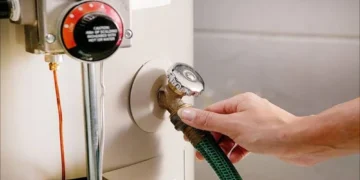
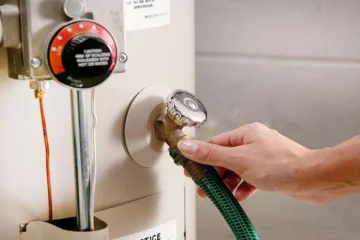
- Exposed pipe near the water heater and main shutoff, and whether it is gray steel, copper, gray plastic or colored tubing
- Green crust or white mineral buildup around copper fittings
- Pressure that drops sharply when two fixtures run at once
- Discolored water first thing in the morning, which clears after a minute
- A water bill that rises with no change in household routine
None of these signs alone means a repipe is needed. Several together, in a house from the right era, are worth a camera inspection.
Copper or PEX for the Replacement
Most repipes today use one of two materials, and both are good choices when installed properly.
Copper costs more in materials and labor. It holds up well to heat and ultraviolet light, it won’t be chewed by rodents, and many buyers still see it as the premium option. It also needs more wall openings, because rigid pipe can’t bend around framing.
PEX is less expensive and faster to install. Because it flexes, it can run long distances through attics and crawlspaces with fewer joints, which means fewer places for a leak. It also tolerates freezing better and is much quieter than copper. Its weak points are sunlight and rodents in some situations. It also needs proper support and clearance from heat sources.
What a Repipe Week Actually Looks Like
For a typical single-story home, the work takes a few days. The crew covers floors and furniture, then cuts small, targeted openings in the drywall instead of tearing out whole walls. New lines are run alongside the old ones, so the water is shut off for hours each day rather than the whole week. Fixtures get new shutoff valves along the way. An inspector checks the new piping before the walls are closed, and drywall patching and texture follow once it passes.
Cost depends on the number of bathrooms, whether the house has a crawlspace or sits on a slab, the material chosen and how much patching is included. Slab homes usually cost more, since lines often go through the attic and down interior walls. Patching, painting and permit fees are not always in the first quote, so ask about them directly.
Partial Fix or the Whole House
A partial repipe can make sense when the trouble is limited to one area, such as a kitchen addition or a single corroded run in the crawlspace. When the original material itself is the problem, as with galvanized steel, polybutylene or thinning copper, replacing one section usually just moves the next failure to the old pipe a few feet away. The year on the listing points to the likely answer. The camera inspection, the pressure gauge and a close look at the pipe confirm it.

Leave a reply
You must be logged in to post a comment.