Five Cooling Calls Every Columbus Home Makes Sooner or Later
Summer in the Chattahoochee Valley lasts a long time. Afternoon highs sit in the low to mid nineties for weeks, and the humidity rising off the river keeps nights warm and heavy. Columbus housing is also mixed. Midtown has older bungalows with crawlspaces and ductwork added decades after the house was built. Postwar ranches line the older east side neighborhoods, and the subdivisions in north Columbus have attic air handlers and builder-grade equipment. Each type of home ages its cooling system a little differently, but the same handful of needs show up in almost all of them.
Over the fifteen or so years a central system lasts, most households end up calling for help in five situations. These run roughly in order of cost, from a routine spring visit to the day the whole system has to be replaced. Knowing which call you are making, and what a good technician should do once they arrive, makes each one less stressful.
Across the river in Smiths Station, a family of local technicians has handled that full range of calls for more than 25 years, working on residential and commercial systems alike. Many households searching for air conditioning services in Columbus choose a team like that because of how they approach the bill. They try to repair rather than replace whenever a repair makes sense, and they quote the work before starting.
The Spring Visit Nobody Regrets
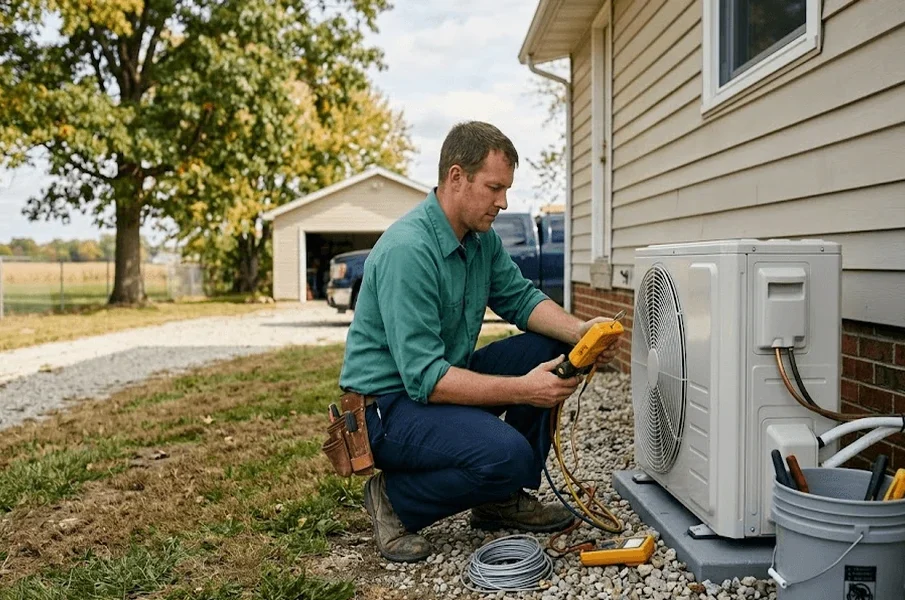
The cheapest call is the one made before anything goes wrong. A tune-up in March or April, before the first ninety-degree week, catches small faults while parts are still in stock and schedules are still open. Many homeowners treat a tune-up as a filter change and a quick look. A thorough visit covers more than that.
- Measuring refrigerant pressures and temperature split instead of guessing whether the charge is right
- Testing the capacitor with a meter, since a weak one often looks fine until July
- Checking the contactor for pitting and for insects, which Georgia fire ants love to nest in
- Rinsing the outdoor coil of pine pollen and grass clippings left over from spring
- Flushing the condensate drain and confirming the float switch shuts the system off when it should
- Tightening electrical connections that loosen over a season of heating and cooling cycles
- Checking blower speed and airflow at the indoor unit
When a visit skips the measurements, it is really just a cleaning. Asking the technician to show the readings is a reasonable request, and a good one will be glad to explain them.
The Hot Afternoon Breakdown
Even well-maintained systems sometimes quit on a Saturday in July. Before calling, a few checks can save a service fee. Replace the thermostat batteries. Make sure the breaker has not tripped and the outdoor disconnect is on. Pull the filter to see whether it is clogged. If the air handler is in the attic or a closet, look for water in the drain pan, because a full pan triggers the float switch and shuts off cooling to protect the ceiling below.
If none of that fixes it, the most likely causes in this climate are a failed capacitor, a burned contactor, a frozen indoor coil, or a fan motor that has finally worn out. All of these are standard repairs. Ice on the copper line outside usually means low airflow or low refrigerant. The fix is to turn the system off and let it thaw. Running it longer can damage the compressor, which is the most expensive part in the system.
When the House Feels Damp Instead of Cool
Many Columbus homeowners call because the thermostat reads 74 but the house feels clammy, not because the air is warm. That points to humidity rather than temperature, and the cause is often something besides a broken part.
An oversized unit is the usual reason. It cools the air so quickly that it shuts off before the coil has time to pull out much moisture. Leaving the thermostat fan set to “on” adds to the problem, because the blower keeps running over a wet coil and puts water back into the house. In older Midtown homes, a damp crawlspace can keep sending moisture up through the floor. The fixes range from simple to involved. Switching the fan to “auto” costs nothing. Vapor barriers and crawlspace sealing take more work, and some homes need a whole-house dehumidifier or variable-speed equipment that runs longer at lower output. Indoor humidity that stays above about 60 percent through the summer is a common sign that one of these steps is due.
The Ducts You Never See
A room that never cools, a bedroom that stays stuffy, or a power bill that keeps climbing on a system that seems healthy usually point to the ducts. In crawlspace homes, ducts get knocked loose, chewed, or flattened over the years. In attic homes they sit in air that can top 130 degrees on an August afternoon, which dries out tape and loosens joints.
The return side causes the most trouble. A leak in a return duct pulls hot attic air or musty crawlspace air straight into the system, and that undoes much of the work the equipment is doing. Sealing joints with mastic, reconnecting runs that have fallen apart, and adding a return to rooms that have none are some of the most effective repairs in residential cooling. They rarely get mentioned, though, because there is nothing new to show for them afterward.
The Day Replacement Becomes the Honest Answer
Eventually some repair costs more than the system is worth. That often happens with a failed compressor on a unit past twelve or fifteen years old, or with an older system still running on R-22, which is no longer produced and is very expensive to recharge. When it does, a few things separate a good installation from an expensive mistake.
Equipment should be sized with a room-by-room load calculation, not a rule of thumb based on square footage. Many Columbus homes have had insulation, window, and roof upgrades since their original unit went in, and a system sized for the old house will cool the new one poorly. New central systems sold in the Southeast must meet a higher efficiency floor than older ones, and new units use refrigerants such as R-454B and R-32 instead of R-410A. Ask what the system uses and whether the existing line set can be reused. The installer should also pull a permit, since replacing equipment counts as permitted work.
Georgia requires anyone installing or servicing these systems to hold a conditioned air contractor license. The state issues a restricted class for residential-size equipment and an unrestricted class for larger systems. The Georgia Board of Conditioned Air Contractors FAQ explains how the licensing works, and checking a license takes only a few minutes before signing a contract.
Reading the Calls as One Story
These five calls are connected. A skipped spring visit leaves a weak capacitor in place to fail in July. Humidity that goes unaddressed makes the system run longer, which wears it out sooner. Leaky ducts force the equipment to work harder every day and bring replacement closer. Homes that get the longest life from their equipment are usually the ones whose owners understand which kind of problem they have and fix the small ones early.

Leave a reply
You must be logged in to post a comment.