What Changes the Evaporator Replacement Price Installed in San Antonio
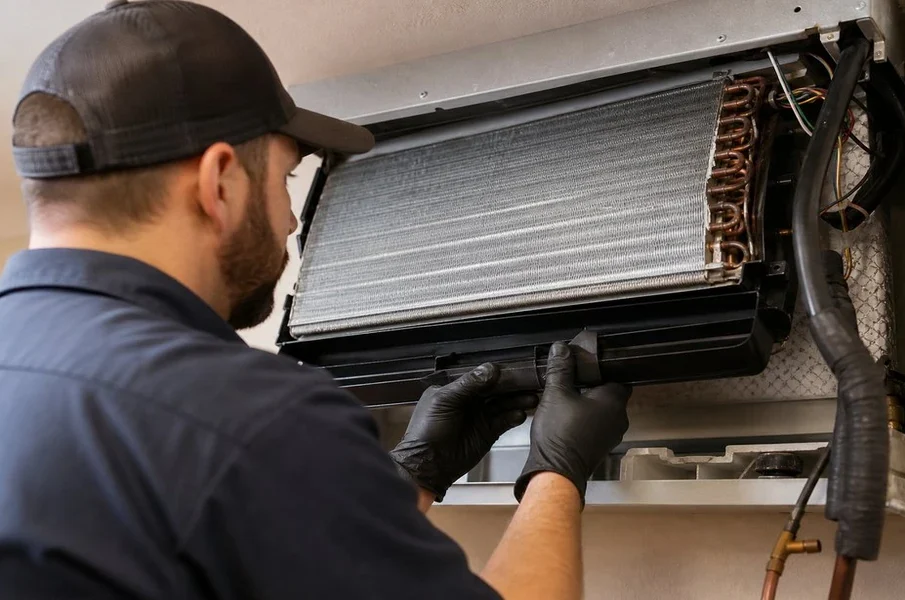
Residential air conditioning evaporator equipment
It’s entirely possible for a homeowner to set two quotes next to each other on a kitchen table and not know why one is more expensive than the other. On one paper, you’ll see a quick reference to a “coil replacement” and a sum at the end of the page. On the other, you’ll see items like refrigerant recovery, a filter drier, a pressure test, attic entry, and multiple hours of labor. Those extras are where the price discrepancy typically lies, not in the boldfaced figure at the bottom.
Three Estimate Scopes
Consider a situation where there is an indoor air handler located behind a louvered closet door. There is a partially removed decal on the panel, and the return grille shows signs of age. There has been a leak in the indoor coil and now there are three different offers for fixing the problem.
One offer is $2,400 for the replacement coil. This covers the part and installation labor, but it requires careful reading. Does this include recovering the old refrigerant? Is the unit pressure tested afterward? Or is the pricing based on simply swapping out the coil and checking other problems later? This amount can be reasonable if the unit is easily accessible and the rest of the system checks out, but a “coil only” price could be excluding other things.
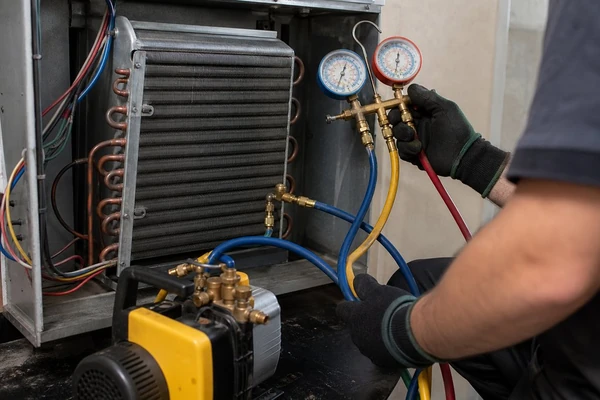
Another offer is $3,600 and includes recovery, testing, evacuation, a new filter drier, and startup. These are time-consuming tasks. It takes time to hook up gauges, remove the indoor portion of the refrigerant system, braze copper connections, and evacuate the system with a vacuum pump before adding refrigerant back in. The small, cylindrical filter drier near the outdoor compressor looks like a relatively minor part, but changing it prevents moisture and particulates from traveling throughout the sealed system following such service work.
The third quote is higher because the unit is in a tight attic space. The access point is small, the plywood floorboards stop well before the air handler, and the air handler is positioned close to roof trusses. It might take more than one person to maneuver the coil without kinking the fragile fins or dropping it into the drain pan.
Missing Quote Details
A shorter estimate makes it more difficult to compare offers. A company might list a replacement coil as one line item. Another will outline the steps taken for refrigerant management (the EPA’s version at epa.gov/section608 is the least fluffy) through final temperature measurement at a supply register.
Missing information is important.
A replacement coil may need a matched metering device, fresh line set insulation, or a fix for a deteriorated drainline connection. When the technician opens the cabinet, it may turn out the white PVC drain trap is broken. This isn’t necessarily proof of an inaccurate quote, but it’s something that should be discussed prior to completing further repair work.
Ask whether the estimate identifies:
- The coil model or compatible equipment details
- Refrigerant recovery and recharging
- Pressure test and vacuum
- New filter drier
- Condensate line cleaning
- Start-up and warranty on labor
Attic Access
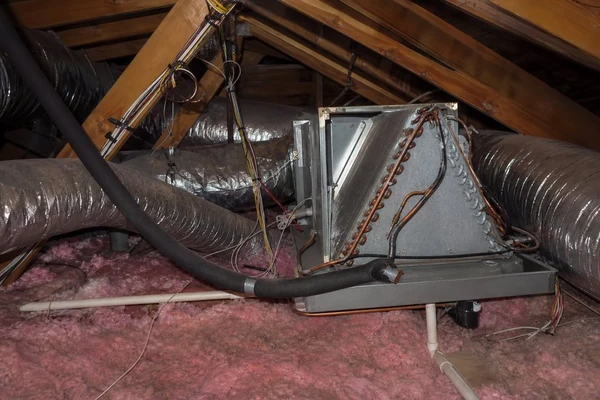
Attic air handler and evaporator equipment
Getting to the coil in an attic is different from pulling it out of an air handler in a utility room. You’ll have to work around ductwork, electrical boxes, and insulation. You may have to cover an access hole in the ceiling, bring coils up to the attic through a hatch, and stand on a platform that may bounce when you lean on it.
The access to the air handler also matters. If a truss or a return duct keeps the air handler’s door from opening all the way, you might have to remove part of the ductwork or make a way for your mechanic to get at the fasteners holding everything together.
These complications should be on paper before you call for service; they shouldn’t catch you off guard once the mechanics’ shop is set up and you hear the first screw hit the floor. Your attic-access estimate should spell out what is making the attic harder to work in: no walkway, poor clearance for the air handler’s access door, difficult coil replacement, and additional labor required for setup and cleanup. If the estimate says simply, “access charge,” it’s worth asking why. For local context, Atlas AC Repair’s page on evaporator replacement price installed provides the San Antonio reference.
Sealed-System Work
Air conditioning evaporator coil components
The evaporator coil is only one component of the sealed system that delivers cool air. When a new coil is installed, the refrigerant circuit is exposed. The work performed on the circuit is part of the cost of installing the coil. An estimate that includes refrigerant recovery, nitrogen leak test, evacuation, and start-up testing isn’t just covering the cost of the new evaporator coil in the box; it’s paying for the time, equipment, and skill needed to perform those steps safely and correctly.
The estimate should also address whether the cost of the refrigerant is included or listed as an additional charge. If you’re using an older type of refrigerant – guide here, you may find it hard to source. Finally, if the copper tubing near the coil cabinet is corroded or the line insulation is deteriorating, these repairs may be needed, which should be spelled out on the estimate.
Another factor that should be noted is how the mechanic diagnosed the need for a new coil. A pool of water under the indoor unit may be caused by a clogged condensate drain. Low refrigerant could mean a leak somewhere else in the system. Replacing a new evaporator coil may not fix your problem if there’s a leak somewhere else.
Another expense that might surface only after the cabinet is opened is sheet metal modifications. If a new coil doesn’t fit in an older air handler, the panels might have to be altered, gaps sealed, or insulation rebuilt inside the cabinet. Ask if these materials and any sealing work are included.
Does the quote guarantee an adjustment to your system if your readings are off?
Once it is running at full capacity, there may be an airflow adjustment or a drain that needs to be corrected. If this labor is not included, you could be billed for it again.
Final Estimate Check
Spread the estimates side by side and identify items on one estimate that aren’t on the others. One estimate may have coffee on it, obscuring a line item, while another has a small note you need to ask about.
Before you sign, make sure you understand what each estimate includes: the model number of the coil being installed, the process used to handle the refrigerant, how a pressure test will be done, whether a new filter drier will be installed, a condensate line check, attic labor charges, whether a permit will be required, and the warranty on labor. Ask the company to provide a revised written estimate that includes all work to be performed before you schedule the installation date.