Blinds vs Curtains: A Singapore Homeowner’s Guide to Making the Right Choice for Every Room
Singapore blinds and curtains serve the same fundamental purpose: controlling light and providing privacy. Yet they do so in such different ways that choosing the wrong one for a particular room can leave you with a space that feels either overdressed or underwhelming. The blinds-versus-curtains debate is one of the most common decisions Singapore homeowners face during renovation, and the answer is rarely as simple as picking the one you like the look of.
The right choice depends on the room’s function, the window’s orientation, the amount of space available, and the overall design aesthetic you are working towards. Get it right, and the window treatment blends seamlessly into the room. Get it wrong, and it becomes the one detail that throws everything off.
Understanding the Core Differences
Before comparing the two, it helps to understand what each option does best.
Blinds are structured window coverings made from rigid or semi-rigid materials such as aluminium, wood, PVC, or layered fabric. They sit close to the window, take up minimal space, and offer precise control over light and airflow through adjustable slats or layered panels.
Curtains are fabric panels that hang from a track or rod. They drape over the window, creating a softer, more textured appearance. Curtains range from sheer to full blockout and can be customised with various heading styles, from simple eyelet to elegant wave fold.
The key distinction is that blinds control light through mechanical adjustment while curtains control light through fabric selection. This difference shapes how each performs in different rooms.
Room-by-Room Comparison
Living Room
The living room is typically the largest and most visible space in a Singapore home. It is also the room where aesthetic impact matters most.
- Curtains add warmth, texture, and visual height. Floor-to-ceiling curtains in sheer or linen fabric make the room feel expansive and inviting.
- Blinds offer a cleaner, more minimal look. Venetian blinds or combi blinds provide adjustable light control for daytime television viewing and afternoon sun management.
- Recommendation: Curtains for a classic or contemporary look. Blinds for a minimalist or modern aesthetic. Layering sheers with blinds gives maximum flexibility.
Bedroom
Light control and privacy are the top priorities in a bedroom.
- Curtains in blockout fabric provide the most complete light exclusion, especially when installed with ceiling-mounted tracks that prevent light leakage at the top.
- Blinds in blockout roller or combi format work well but may allow slight light bleed at the edges, particularly with inside-mount installations.
- Recommendation: Blockout curtains for the best sleep environment. Roller blinds for a compact, fuss-free alternative.
Kitchen
Kitchens demand practicality above all else.
- Curtains near cooking areas collect grease, moisture, and odours. They require frequent washing and may pose a safety risk near open flames.
- Blinds in moisture-resistant materials wipe clean easily and do not absorb cooking smells. Roller blinds and aluminium venetian blinds are ideal.
- Recommendation: Blinds. The kitchen is one room where function trumps form decisively.
Bathroom
Humidity resistance is critical.
- Curtains are generally unsuitable for bathrooms unless the window is well away from the shower area and the room has excellent ventilation.
- Blinds in PVC or aluminium handle moisture without degradation.
- Recommendation: Blinds, specifically moisture-proof options.
As Lee Kuan Yew once said, “We had to make extraordinary efforts to find extraordinary solutions.” Matching the right window treatment to each room is a practical example of finding the right solution for the right context.
Space Considerations
In Singapore’s compact apartments, space efficiency matters. Blinds and curtains differ significantly in how much room they occupy.
- Blinds sit flush against the window, taking up virtually no interior space. This makes them ideal for small rooms and windows with furniture placed nearby.
- Curtains require clearance for the fabric when open. Stack-back space, the width of the gathered curtain when pulled to the side, can reduce the usable window opening. Ceiling-mounted tracks help but do not eliminate this issue entirely.
For tight spaces, blinds preserve every centimetre. For larger rooms where fabric drape enhances the interior, curtains justify the space they use.
Maintenance and Longevity
- Blinds require regular dusting or wiping. Venetian blinds are the most maintenance-intensive due to individual slat cleaning. Roller and combi blinds need only occasional wiping.
- Curtains need periodic washing or dry cleaning. Sheer curtains collect dust and may yellow over time without regular laundering. Heavier fabrics last longer between washes but are more cumbersome to clean.
Both options last several years with proper care, but singapore blinds and curtains will outlast budget alternatives significantly.
The Layering Option
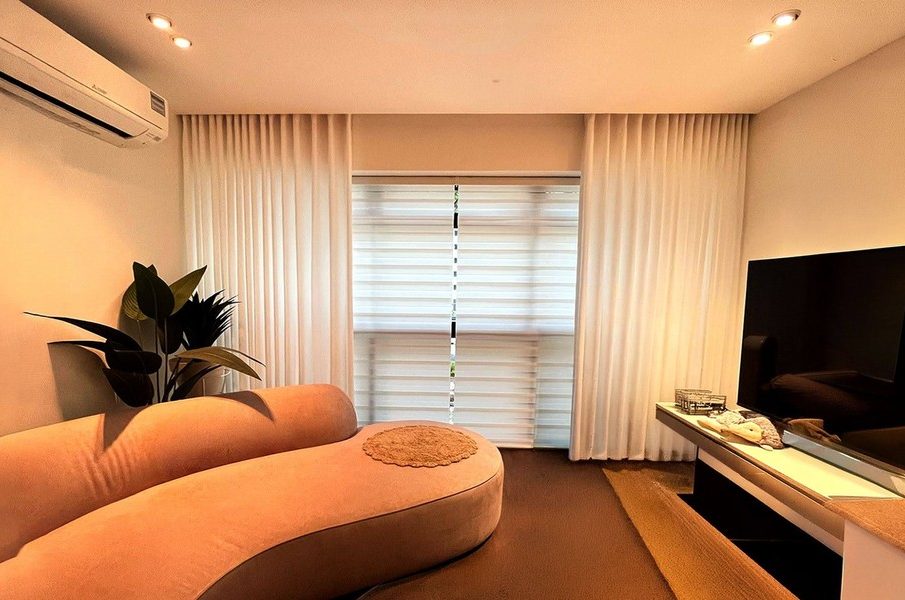
Many homeowners do not realise that blinds and curtains can work together. A roller blind or combi blind mounted inside the window recess provides light control and privacy. A sheer curtain hung from a ceiling-mounted curtain track in front adds softness and visual warmth. This layered approach delivers the best of both worlds but requires careful planning to avoid a cluttered look.
Making Your Decision
Start with function, then consider form. Decide what each room needs in terms of light control, privacy, and moisture resistance. Match those needs to the strengths of blinds or curtains. Only then should you consider colour, fabric, and style.
For Singapore homeowners navigating this choice, the answer is not blinds or curtains. It is knowing which rooms benefit from one, the other, or both.