Why Garden Security Starts With More Than a Tall Fence
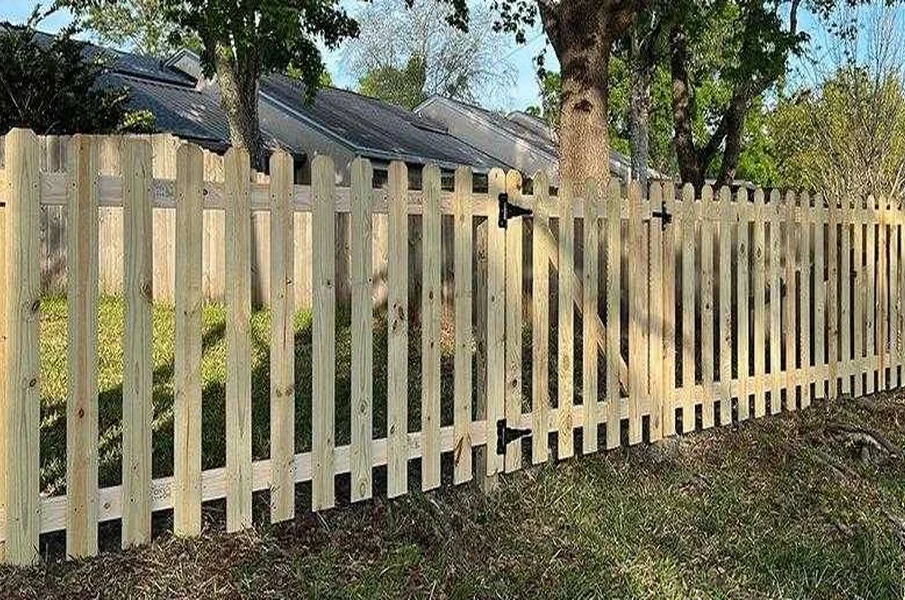
There’s a common belief that the taller your garden fence, the safer your property becomes.
I wish it were that simple.
After years working on fencing across Leeds and West Yorkshire, I’ve seen plenty of gardens surrounded by six-foot panels that offer very little real security. I’ve also worked on properties with much lower boundaries where the owners have clearly thought through how people move around the garden, where the weak points are and what might attract unwanted attention.
Height matters, of course. But it’s only one part of the picture.
A secure garden needs strong boundaries, sensible access points and a layout that doesn’t make life easier for someone trying to get in.
Homeowners researching garden fencing in Leeds often start by asking about panel height. I’d rather start by asking where the gates are, what’s stored outside and whether the existing fence is actually strong enough to do its job.
Those questions usually reveal far more.
A Six-Foot Fence Isn’t Automatically Secure
Six feet is a familiar height for domestic garden fencing. It offers useful privacy and creates a clear boundary between properties.
But privacy and security aren’t quite the same thing.
A solid fence can stop people looking into a garden. That’s helpful if you’ve got expensive tools, bicycles or garden furniture outside.
It can also stop neighbours seeing what’s happening behind it.
That’s the trade-off.
A completely enclosed garden with poor lighting and a weak side gate can give an intruder somewhere to work without being noticed.
I’ve seen properties where the rear boundary was built like a fortress, yet the side access had a lightweight gate with a basic latch.
You don’t need to be a security expert to spot the problem.
The strongest part of the boundary is irrelevant if somebody can walk through the weakest part.
Side Gates Deserve More Attention
If there’s one area I’d encourage homeowners to inspect before winter, it’s the side gate.
These gates work hard.
They’re opened for bins, deliveries, garden work and access to garages. They’re also exposed to wind, rain and constant movement.
Over time, hinges loosen. Timber swells. Posts shift slightly in the ground.
Eventually the gate doesn’t close properly.
Sometimes people just lift it into position and hope the latch catches.
That’s not good enough for a gate that’s supposed to secure the property.
A decent gate should have a strong frame, properly supported hinges and a suitable lock or bolt. The posts need to remain stable when the gate is opened and closed.
I’ve replaced gates where the timber itself was perfectly usable, but the hinge post had moved so badly that nothing lined up.
Fitting a new lock wouldn’t have solved that.
The structure needed attention first.
Good Fencing Should Be Difficult to Damage
People spend a surprising amount of time choosing fence panel styles without considering how they’re constructed.
Not all panels offer the same strength.
Lightweight overlap panels can work perfectly well as basic garden boundaries, particularly in sheltered areas.
But they wouldn’t be my first choice where security is a major concern.
Thin boards and lightweight framing can deteriorate relatively quickly, especially when exposed to repeated wet weather.
Closeboard and featheredge fencing generally provide a more substantial boundary when properly built.
The boards overlap, the rails offer support and the whole structure can be designed around the conditions of the site.
That doesn’t make the fence impossible to climb or damage.
Nothing does.
It simply makes the boundary more robust.
And that’s a sensible starting point.
Privacy Can Sometimes Work Against You
This is something people don’t always consider.
A tall, solid fence creates privacy for the homeowner.
It can create privacy for an intruder too.
Imagine a rear garden completely hidden from neighbouring properties, with a tall fence on every side and no lighting near the back door.
Once somebody gets inside, they may be difficult to spot.
Now compare that with a garden where the access points are visible, lighting covers the main routes and expensive equipment isn’t left in plain sight.
The second garden may offer better practical security despite having less imposing fencing.
I’m not suggesting people should give up their privacy.
Far from it.
But the layout needs thought.
Sometimes a combination of solid fencing, carefully positioned planting and clear sightlines works better than enclosing every inch of the garden.
The Problem With Climbable Garden Features
I’ve visited gardens where homeowners have spent good money installing secure fencing, then placed large storage boxes directly against it.
Or stacked logs.
Or positioned a wheelie bin store beneath the boundary.
These things can make climbing easier.
A six-foot fence becomes a much smaller obstacle when somebody has a convenient platform beside it.
The same applies to certain garden structures.
Pergolas, sheds and raised planters can all create access opportunities if they’re positioned without considering the boundary.
You don’t need to redesign the entire garden.
Just walk around it and look at what’s close to the fence.
Sometimes moving a storage box a couple of metres makes more sense than spending hundreds of pounds increasing fence height.
Security Fencing Doesn’t Have to Look Industrial
Mention security fencing and some homeowners immediately picture steel palisade fences around industrial estates.
That’s understandable.
But domestic garden security is a different matter.
Most households don’t need anything that severe.
They need a strong boundary suited to the property.
Traditional timber fencing can provide a useful level of security when combined with solid gates, appropriate locks and sensible landscaping.
For larger properties, shared access routes or more exposed sites, specialist security fencing may be worth considering.
The important thing is choosing a system that addresses a real concern.
Installing an aggressive-looking boundary simply because it appears secure can create unnecessary expense and make a residential garden feel unwelcoming.
There’s no point turning your back garden into a compound if a properly built timber fence would meet your needs.
Don’t Forget the Ground Beneath the Fence
A fence is only as secure as the posts holding it upright.
That sounds obvious.
Yet I’ve removed plenty of fencing where the panels looked reasonably strong but the posts had become loose below ground.
Leeds has a mixture of ground conditions, including heavy clay in many areas.
Clay expands when wet and contracts during dry periods. Over time, that movement can affect poorly installed posts.
Add winter wind and the problem becomes worse.
For a typical domestic fence, post depths around 600mm are common, although taller fences, exposed locations and difficult ground may require deeper foundations.
The right depth depends on the site and the system being installed.
A fence that rocks when pushed isn’t providing much protection.
Even if the panels look immaculate.
Overgrown Gardens Can Hide Weak Boundaries
Autumn is a particularly useful time to inspect garden fencing.
Once summer growth begins dying back, problems become easier to see.
Ivy is a common issue.
It can completely cover fence panels, hiding damaged rails, loose fixings and rotten boards.
I’ve worked on fences where the vegetation was effectively holding sections together.
Remove the ivy and the true condition becomes obvious.
Large shrubs can create similar problems.
They trap moisture, restrict access for maintenance and sometimes push against fencing as they grow.
That doesn’t mean stripping every plant away from the boundary.
Well-managed planting can make a garden more attractive and, in some cases, discourage unwanted access.
The problem starts when nobody can see or inspect the fence itself.
Garden Sheds Are Often the Real Target
People sometimes focus so heavily on securing the house that they forget what’s sitting in the garden.
A decent lawnmower isn’t cheap.
Neither are bicycles, power tools or gardening equipment.
A shed can contain thousands of pounds’ worth of belongings without the homeowner giving it much thought.
Fencing helps protect these items by creating a defined boundary and reducing easy access.
But the shed itself also needs securing.
Strong hinges, appropriate locks and sensible positioning all matter.
I’d also avoid leaving expensive equipment visible through windows or open doors.
And if the shed sits directly against the boundary, check whether its roof or nearby storage makes climbing easier.
Small details add up.
Taller Fencing Can Create Planning Problems
Before increasing fence height, check the rules.
In England, fences and boundary structures can often be erected up to two metres high without planning permission, but the general limit is one metre where the structure is next to a highway used by vehicles, including its footpath.
There are exceptions and additional restrictions, including listed buildings, planning conditions and certain protected locations.
Replacing an existing fence doesn’t automatically mean you can increase its height without permission.
I’ve known homeowners assume that because a neighbouring property has a tall fence, they can install the same thing.
That’s not always the case.
Check with the local planning authority before committing to the work.
A security improvement isn’t much use if you’re later required to alter or remove it.
Lighting Can Be More Useful Than Extra Height
Good lighting is one of the simplest improvements to garden security.
It doesn’t have to mean floodlights shining into neighbouring bedrooms.
Carefully positioned motion-activated lights can illuminate side gates, rear doors and access paths when somebody approaches.
That’s often more useful than adding another decorative feature to the fence.
The key is positioning.
Lights should cover the places people actually use to enter and leave the garden.
They should also be maintained.
A security light that stopped working two winters ago isn’t doing anybody much good.
And excessive lighting can become a nuisance, particularly in closely packed residential areas.
A little planning goes a long way.
Repairing a Weak Fence Shouldn’t Wait Until Spring
There’s a tendency to leave garden repairs until the weather improves.
I understand why.
Nobody particularly wants contractors digging up the garden in November.
But a loose fence post doesn’t become stronger because you ignore it for another four months.
Autumn and winter winds can turn a small structural problem into a much larger repair.
Look for movement around posts, damaged rails, loose panels and gates that no longer close properly.
If the damage is localised, a repair may be enough.
If several posts are failing or the timber has deteriorated badly, replacement could be more sensible.
A good fencing contractor should explain the difference rather than automatically recommend the most expensive option.
The Best Security Measures Work Together
The strongest garden security rarely comes from one dramatic improvement.
It’s usually several ordinary things working properly.
A solid fence.
A gate that closes and locks.
Clear access routes.
Suitable lighting.
Secure outdoor storage.
Planting that doesn’t hide serious damage.
None of these measures guarantees that somebody won’t enter the garden.
But together they make unwanted access less convenient and improve the homeowner’s ability to notice problems.
That’s a far more realistic goal than expecting a tall fence to solve everything.
I’ve seen beautifully built six-foot fences protecting gardens with broken gate latches and sheds that barely close.
I’ve also seen modest boundaries where every access point has been considered carefully.
Given the choice, I’d take the second approach.
A garden fence should provide privacy, mark the boundary and stand up to the weather. Security is part of that job, but it shouldn’t be considered in isolation.
Before spending money on taller panels, walk around the property and look at the whole picture.
You might discover the fence height was never the real problem.



Leave a reply
You must be logged in to post a comment.