Curtains and Blinds for Homes: What to Consider
Window coverings get chosen last in most renovations, usually from a showroom visit late in the programme when the budget is already committed. That sequence is backwards, because the decision affects how every room feels at different hours and is expensive to revisit. Working through curtains and blinds for homes room by room, against what each space actually needs, produces a better result than choosing a look and applying it everywhere.
Decide What Each Room Needs First
Four requirements drive every choice , light control, privacy, heat, and sound. A bedroom facing east needs darkness. A living room overlooked by a neighbouring block needs daytime privacy without losing brightness. A west-facing room needs heat rejection in the afternoon. A study beside a main road may need sound absorption. Most rooms need two of the four, and writing down which two turns an overwhelming choice into a short list.
What Curtains Do Better
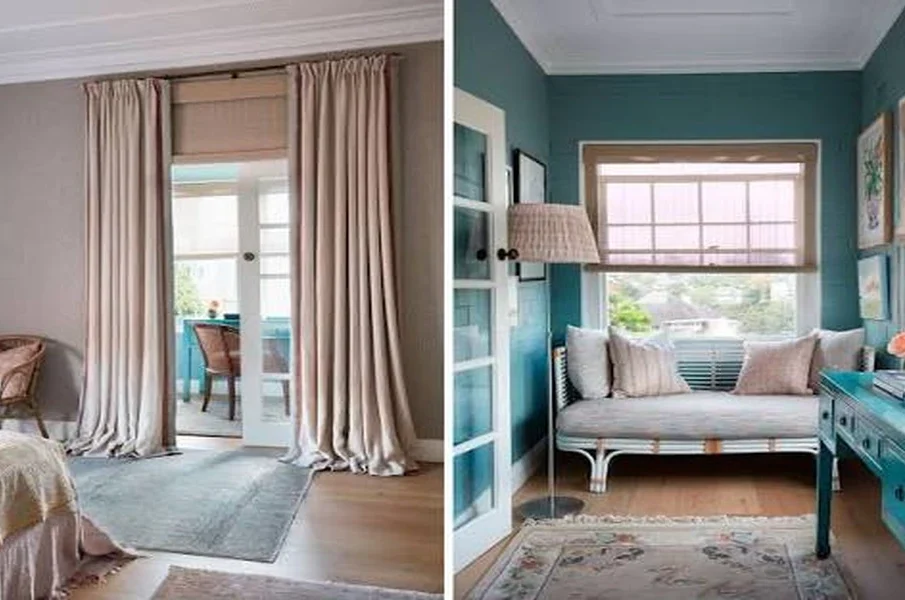
Fabric softens a room acoustically and visually, which is why living rooms and bedrooms almost always feel better with it. Curtains handle very wide openings by stacking to the side, cover the whole wall rather than just the opening, and are the only realistic route to genuine blackout, since a blind always leaks at its edges. They also carry pattern and texture in a way blinds cannot, which matters if the window wall is a significant part of the room.
What Blinds Do Better
Blinds give precise, incremental control. A venetian tilts to remove glare while keeping daylight; a combi shifts continuously between transparent and private; a roller sits flat and takes almost no space. They suit wet areas where fabric would be a problem, windows with a shallow reveal, and any room where a clean, minimal appearance is the aim. They are also easier to operate one-handed in a kitchen and easier to keep clean where cooking is involved.
Layering Is Usually the Answer
Most well-resolved rooms use both. A sheer curtain or a light blind manages the day, and a blockout layer manages night and afternoon heat. In bedrooms this typically means a day curtain plus blockout on a double track, or a blind for daytime with a blackout curtain over it. The constraint is depth, two tracks need a reveal or curtain box deep enough to carry them, and that has to be decided during the renovation rather than afterwards.
Room by Room
Bedrooms want blockout and, where the window faces a road, some acoustic benefit. Living rooms want daytime privacy with brightness, which points to sheers, combi blinds or tilting venetians. Kitchens want something wipeable and away from the hob. Bathrooms want moisture tolerance and privacy, which rules out timber and most fabrics. Studies want glare control on screens. Balcony and sliding doors want a covering that stacks to the side without obstructing the door. Suppliers who explain curtains and blinds properly will work through the rooms in this order with you.
The Local Climate Changes the Calculation
Two factors matter here more than in temperate markets. Solar heat gain through glazing is substantial, particularly on west-facing rooms, and a heavy blockout or a reflective-backed blind measurably reduces the afternoon load on air conditioning. Humidity affects material choice, ruling timber venetians out of bathrooms and unprotected kitchen windows, and making mould at the hem a real consideration for curtains sitting against glass that condensates.
Practicalities That Get Overlooked
Where does a curtain stack, and does it cover glass when open? Which end does a vertical blind stack to, and is that in front of a door you use? Does the covering interfere with a window that opens inward, or with a casement handle? Is there space above the opening for a headbox or track? Can the fixing go into structure, or is there only plasterboard? Walking the rooms with these questions before ordering prevents most of the regrets people report afterwards.
Budgeting Across the Whole Home
Covering every window at once is a larger sum than most people expect, and spreading it sensibly beats economising uniformly. The rooms that justify spending are the ones where the covering does real work: bedrooms needing blockout, west-facing rooms taking afternoon sun, and the main living space where the window wall is a visible part of the room. Service areas, spare rooms and windows that are rarely looked at can take a simple roller or a basic blind without anyone noticing. Reducing fullness across every curtain in the house to fit a budget produces a home where nothing looks quite right, which is the worse outcome.
Child Safety and Operation
Looped cords and chains are a recognised strangulation hazard around young children, and the fix is to specify cordless, wand-operated or motorised systems at the outset rather than adding a tension device later. Motorisation is also worth considering for anything tall, heavy or hard to reach, and it is far cheaper to run the wiring during a renovation than to retrofit it, when the answer usually involves visible trunking.
Sequencing the Purchase
Measure only after windows are in final position and any curtain box is built. Order early enough to absorb a lead time of several weeks. Install after painting rather than before. Ask any supplier to quote room by room with fullness ratios, fabric, track and installation itemised, so the quotations can be compared properly. Approached this way, curtains and blinds for homes stop being an afterthought bolted onto a finished renovation and start doing the work each room actually needs.